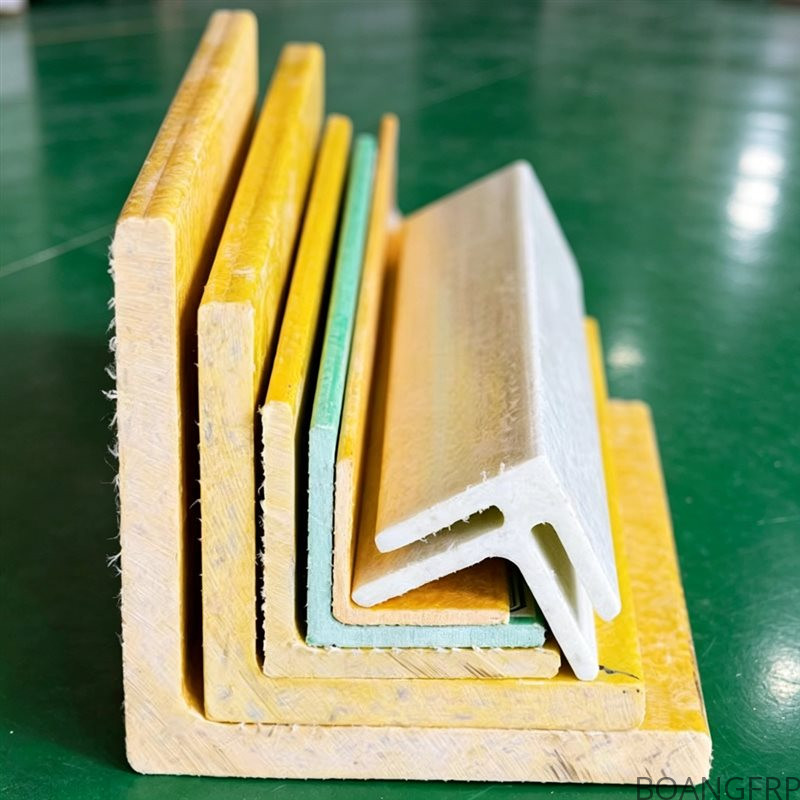
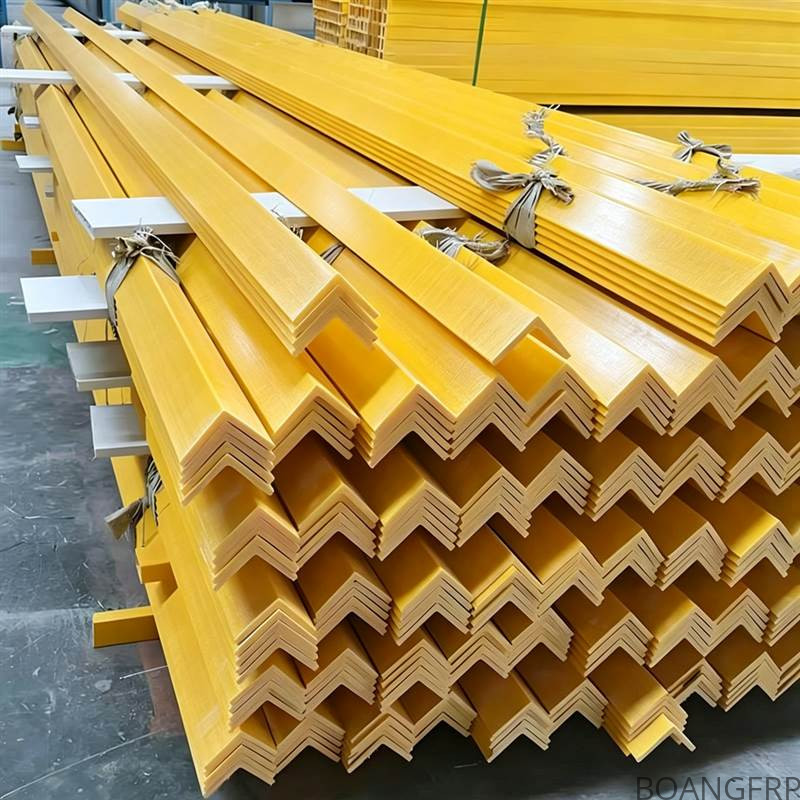
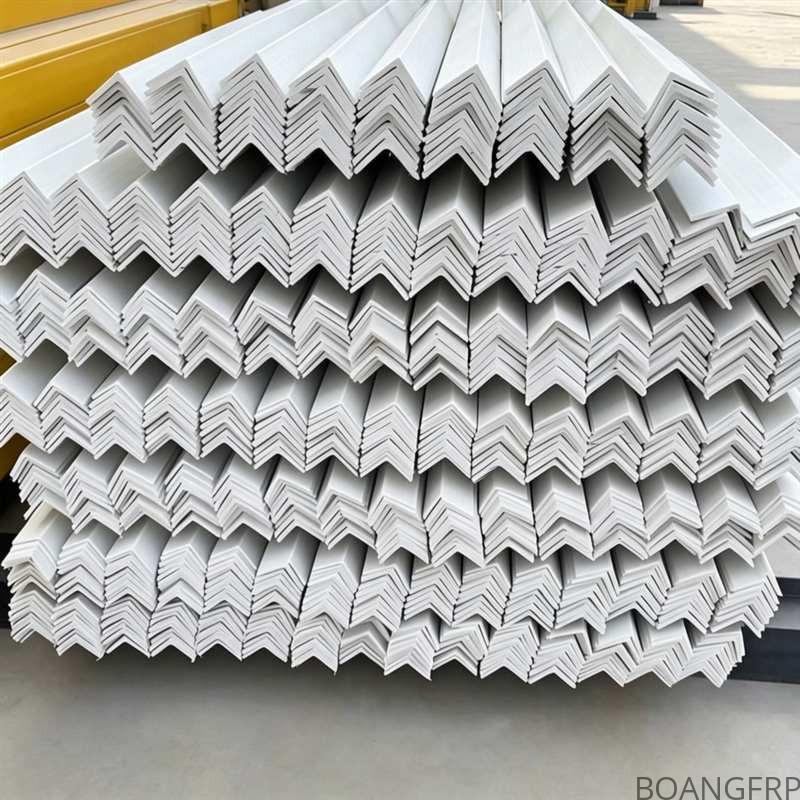


Product Advantages:
Lightweight, High Strength, Corrosion Resistant And DurableUse:
Industry, agriculture, construction, marine, entertainmentSurface treatment:
Smooth surfaceSize:
30/40/50/75/100mm, can be cutomizedMaterial:
Fiberglass + Resin baseColor:
Yellow, Orange, Blue, Green, Grey, etc. can be cutomizedType:
FRP/GRP angles
In structural engineering, steel angles have been the standard for bracing, framing, and edge support for over a century. However, in chemical plants, water treatment facilities, and coastal structures, steel angles rust. When they rust, they lose their structural integrity, requiring costly maintenance or complete replacement.
This is where the Pultruded FRP Angle (Fiber Reinforced Plastic) becomes an indispensable material. Designed as a direct structural alternative to steel, these profiles offer high strength with zero corrosion. This guide explains how to specify these profiles—whether you call them a Fiberglass L angle, an FRP L profile, or a Pultruded GRP Angle—to ensure your structural framing performs reliably for decades.
The pultrusion process pulls continuous glass fibers through a resin bath and heated die, creating a composite profile with exceptionally high longitudinal strength.
Corrosion Resistance: Unlike steel, FRP will never rust, even when exposed to saltwater, acids, or harsh chemicals. No painting or galvanizing is required.
Lightweight: An FRP angle weighs roughly one-quarter of a steel angle of the same dimensions. This makes it easier to transport, lift, and install, significantly reducing labor costs on site.
Electrically Non-Conductive: This is critical for electrical substations, cable tray supports, and telecom towers. It eliminates the risk of electrical conductivity.
Electromagnetic Transparency: FRP does not interfere with magnetic fields, making it ideal for specialized medical or communication equipment framing.
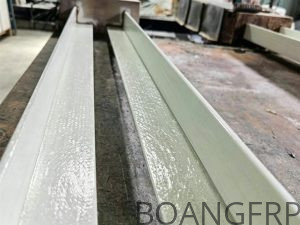
When selecting an FRP L profile, you need to understand the standard sizing conventions. They are typically defined by their leg length, leg thickness, and overall length (similar to steel). For example, a 50x50x6mm angle means both legs are 50mm long with a 6mm wall thickness.
Because FRP is a composite, the structural behavior differs slightly from steel. You must refer to the manufacturer’s load tables for bending and deflection. While it has excellent tensile strength along the fibers, the cross-directional strength is lower. Therefore, careful attention must be paid to how the angle is loaded and supported.
Most structural applications, such as supporting FRP grating or cable trays, use smooth angles. However, if the Fiberglass L angle is used as a walking surface edge, a stair stringer, or a handrail, a gritted surface is highly recommended.
Gritted profiles have an abrasive layer bonded to the surface during manufacturing. This provides slip resistance in wet or oily environments, ensuring worker safety.

Working with Pultruded GRP Angle (the common term in Europe and the UK) requires slightly different techniques than steel.
Cutting and Drilling: Use carbide-tipped or diamond-coated blades. Standard woodworking tools can also be used for smaller profiles. Always wear respiratory protection, as the dust is an irritant.
Sealing Cut Edges: This is the most critical step. Whenever you cut or drill an FRP angle, you expose raw glass fibers. These fibers can wick moisture into the core of the profile, leading to delamination. Always seal all cut edges with a compatible resin.
Fastening: Use stainless steel fasteners. To prevent galvanic corrosion between the stainless steel and the carbon in the FRP (if carbon fibers are present, though standard glass fiber is less susceptible), use isolating washers. When bolting, avoid over-tightening, as this can crush the composite material. Use washers to distribute the load.
BOANG manufactures high-quality pultruded profiles, including the Pultruded FRP Angle and custom sizes, for industrial clients worldwide. We understand that structural framing is the backbone of your project.
We utilize high-quality orthophthalic, isophthalic, and vinyl ester resins to ensure our products possess exceptional resistance to ultraviolet radiation and chemical corrosion.Our profiles are pultruded with a high glass-to-resin ratio, providing exceptional stiffness and strength. Every order can include mechanical test reports and material certificates to satisfy your engineering requirements.
If you need structural angles for platforms, cable tray supports, or chemical plant framing, send us your dimensions, load requirements, and environmental conditions. Our team will help you select the right profile and provide a factory-direct quote within 24 hours.
Contact BOANG today to secure reliable, corrosion-free structural support for your next project.

The FRP pultruded tubes produced by our company include square tubes, rectangular tubes, round tubes, etc. We can also customize other special-shaped tubes acc…
Read More
FRP ladder is made of FRP pultruded profiles through assembly process. It has the characteristics of light weight, high strength, easy installation, corrosion …
Read More
Fiber reinforced plastic panels are made by pultrusion process. We can customize various specifications and colors according to customer requirements.
Read More
The FRP guardrail system is assembled with FRP pultruded profiles and has the characteristics of light weight, high strength, corrosion resistance, easy instal…
Read More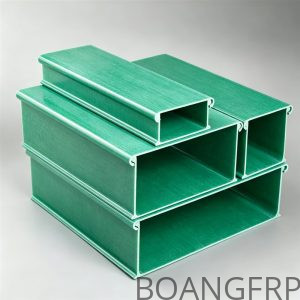
Choosing the Right FRP Cable Tray Manufacturer for Your Project Sourcing materials for an industrial project is rarely just about finding the lowest price.…
Read More
Fiberglass round rod is a kind of FRP rod made by pultrusion process. We can make various specifications according to customer requirements.
Read More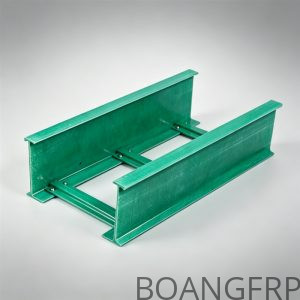
& GRP Cable Ladder: Heavy-Duty Cable Support When routing heavy power cables across a plant, engineers often face a structural dilemma. Standard cable tray…
Read More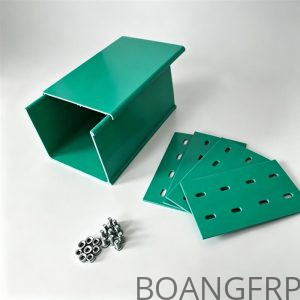
FRP cable trays are mainly used to support and protect cables. The main styles are trough type, ladder type and perforated type.
Read MoreIf you are interested in our products and want to know more details, please leave a message here, we will reply you as soon as we can.