



FRP Cable Ladder & GRP Cable Ladder: Heavy-Duty Cable Support
When routing heavy power cables across a plant, engineers often face a structural dilemma. Standard cable trays might not provide the required support over long spans, while traditional steel ladders will inevitably rust in corrosive environments. When the steel rusts, its load-bearing capacity drops, creating a severe risk to your power distribution system.
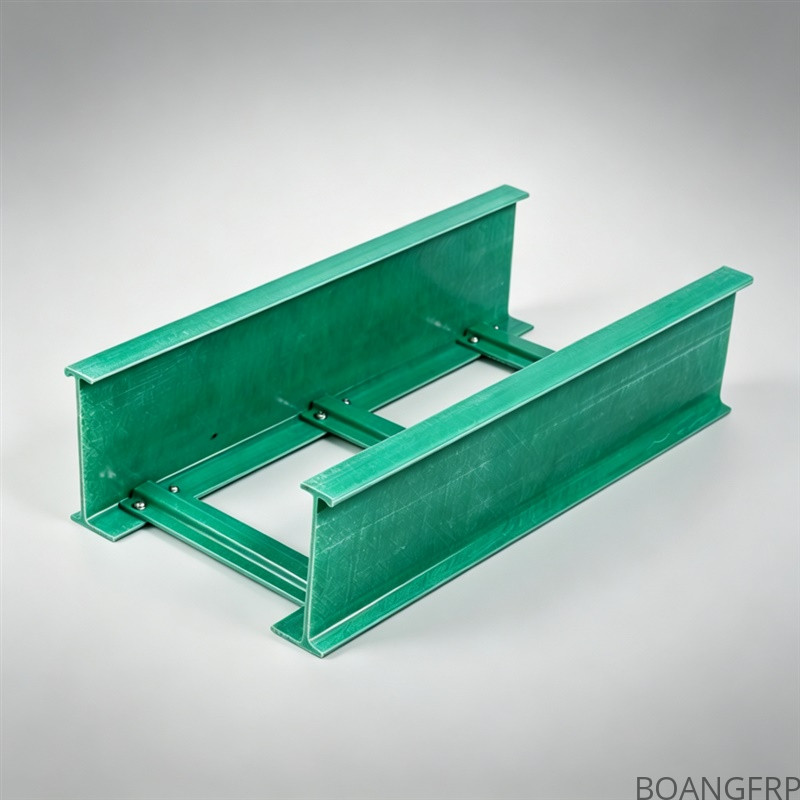
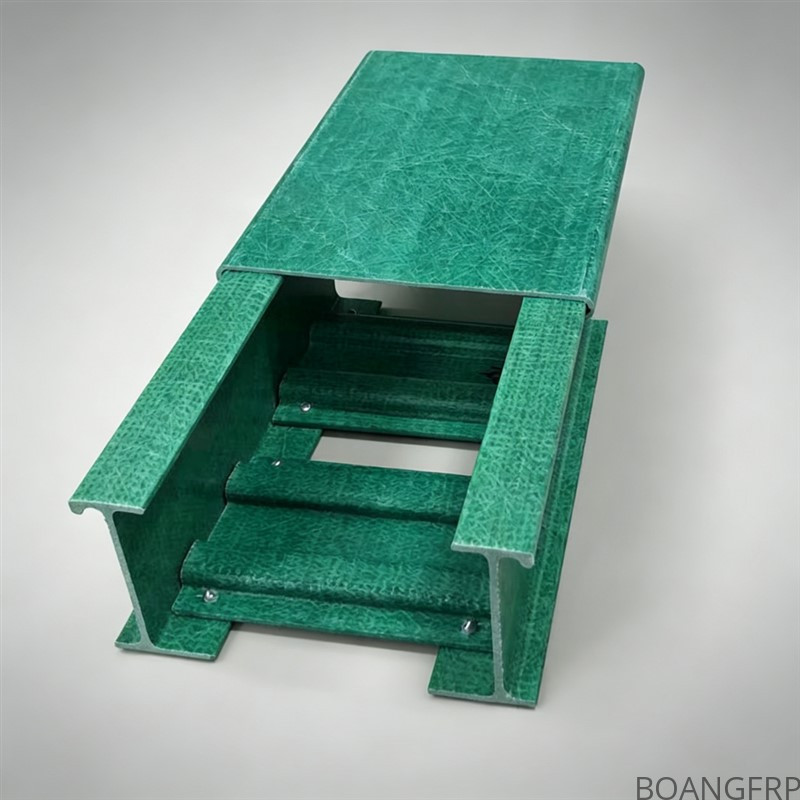
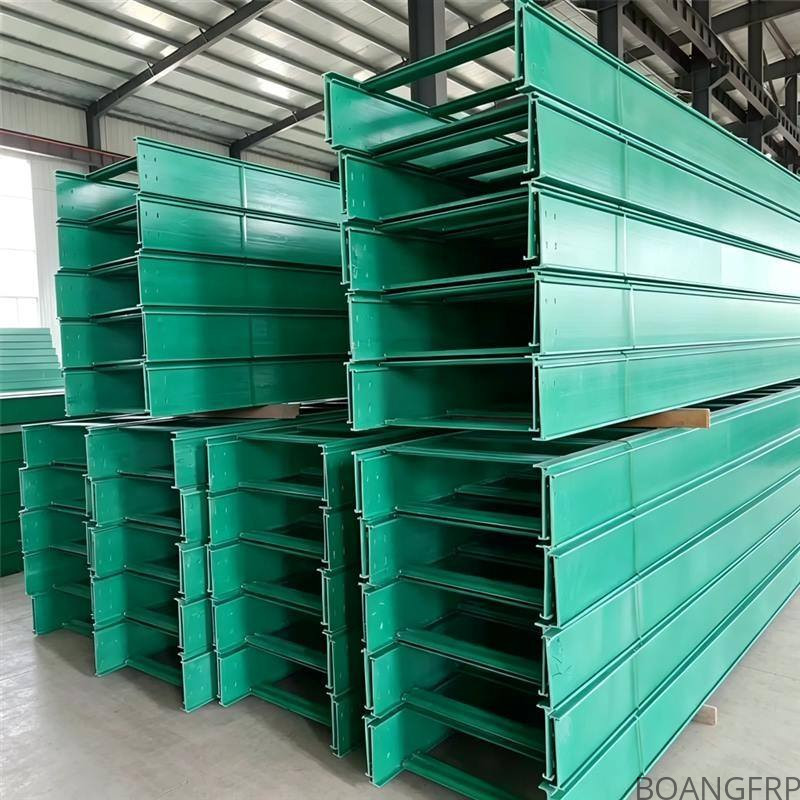
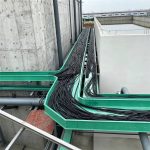
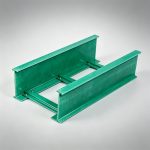
This is where the FRP cable ladder proves its value. Unlike enclosed trays, a cable ladder relies on a rugged side-rail and rung design. It is engineered specifically for high weight, long spans, and maximum heat dissipation.
Why Choose a Cable Ladder Over a Tray?
The choice between a tray and a ladder usually comes down to the cable type. If you are routing dozens of small control cables, a perforated tray is ideal. But if you are supporting large-diameter, heavy-duty power cables, a GRP cable ladder is the better engineering choice.
The open-rung design offers two major benefits:
-
Maximum Ventilation: Heavy power cables generate significant heat. The open structure of a ladder allows ambient air to flow freely, preventing heat buildup that can degrade cable insulation.
-
High Load Capacity: The deep side rails (typically 100mm to 200mm high) provide exceptional structural rigidity, allowing the ladder to span longer distances between supports without sagging.
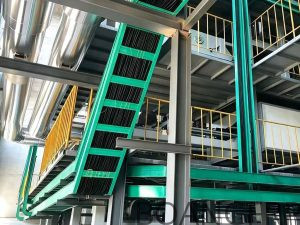
The Advantage of FRP in Harsh Environments
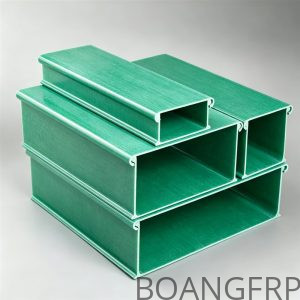
Using an FRP cable ladder (Fiberglass Reinforced Plastic) solves the corrosion problem entirely. Manufactured through the pultrusion process, the glass fibers are pulled and cured with thermoset resin to create a material that will never rust.
In chemical plants, wastewater treatment facilities, or coastal power stations, FRP ladders outlast galvanized steel by decades. Furthermore, they are non-conductive. This provides a critical safety barrier for maintenance workers in the event of a cable fault. They are also incredibly lightweight, meaning a two-person crew can easily lift and position a standard section without heavy cranes.
Engineering Considerations for Installation
While GRP cable ladder systems are incredibly strong, they require specific installation practices to ensure long-term reliability.
-
Support Spans and Deflection: Do not guess the support distance. You must consult the manufacturer’s load/deflection curve. A ladder fully loaded with heavy cables will bend if supported too far apart. Always account for the combined weight of the cables and the ladder itself.
-
Managing Thermal Expansion: FRP has a higher coefficient of thermal expansion than steel. For long, straight runs, you must install expansion joints. If the ladder is bolted rigidly from end to end, temperature changes will cause it to buckle or crack the resin.
-
The Grounding Requirement: Because it is non-conductive, an FRP ladder will not serve as an equipment grounding conductor. You must run a continuous copper grounding wire along the ladder and bond each section together using conductive jumpers.
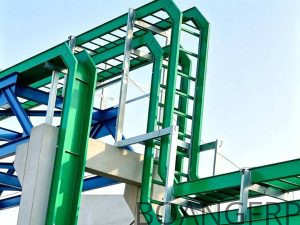
Accessories and Cut Edge Sealing
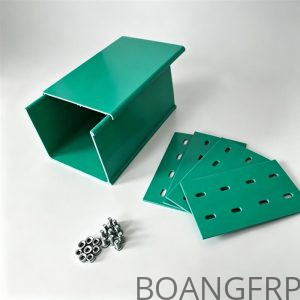
A professional installation requires compatible accessories. Always use FRP or stainless steel brackets—avoid standard carbon steel brackets, which will create a galvanic corrosion point.
When routing cables or making connections, your installation team will likely need to cut or drill the ladder. Every cut edge and drilled hole must be sealed with a compatible resin. If the raw glass fibers are exposed to moisture or chemicals, they will wick the liquid in, leading to structural failure over time.
Why Buyers Partner with BOANG
At BOANG, we manufacture heavy-duty FRP cable ladder and GRP cable ladder systems designed for the world’s toughest industrial environments. We understand that a power failure is not an option.
We utilize premium vinyl ester or isophthalic resins to provide exceptional chemical resistance and UV stability. Our ladders are available in standard widths (up to 600mm or more) and can be customized with different rung spacings to perfectly match your cable layout. Every shipment includes detailed load data and material certificates.
If you are planning a heavy-duty cable routing project, do not let rust dictate your maintenance schedule. Send us your cable weights, span distances, and environmental conditions. Our technical team will help you size the right ladder and provide a factory-direct quote within 24 hours.
Contact BOANG today to secure a reliable, corrosion-free cable support system for your facility.