


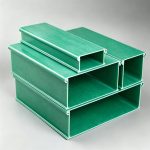
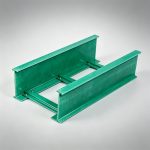
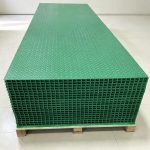


Pultruded FRP I-Beam: High-Load Structural Framing for Harsh Environments
When designing the primary load-bearing structures for a chemical plant, wastewater facility, or coastal bridge, engineers typically rely on structural steel. But steel rusts. The maintenance costs to constantly sandblast and repaint steel beams can ruin a facility’s operating budget, and the eventual loss of structural integrity creates severe safety risks.
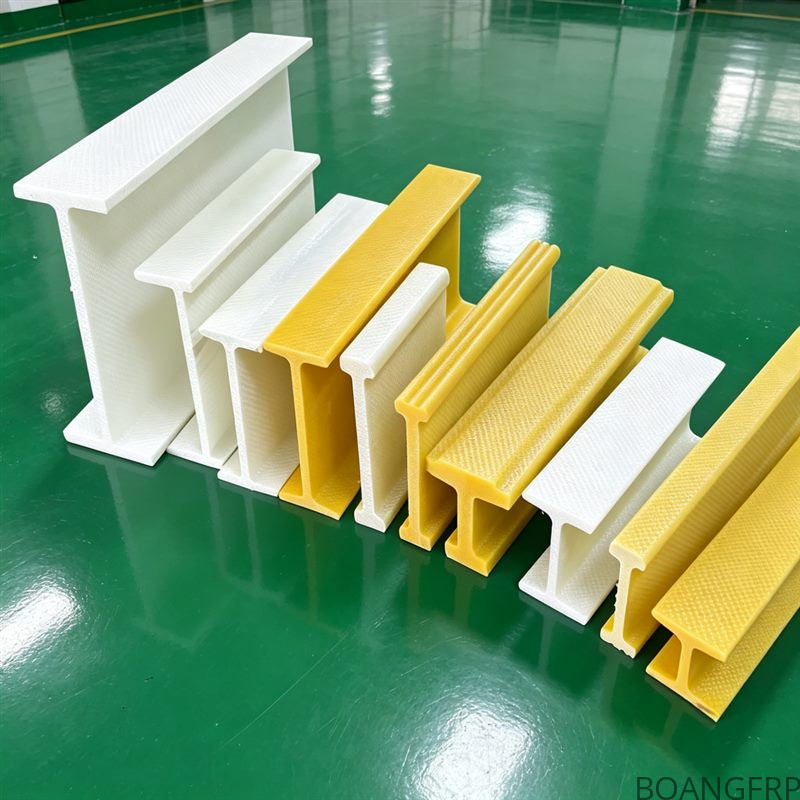
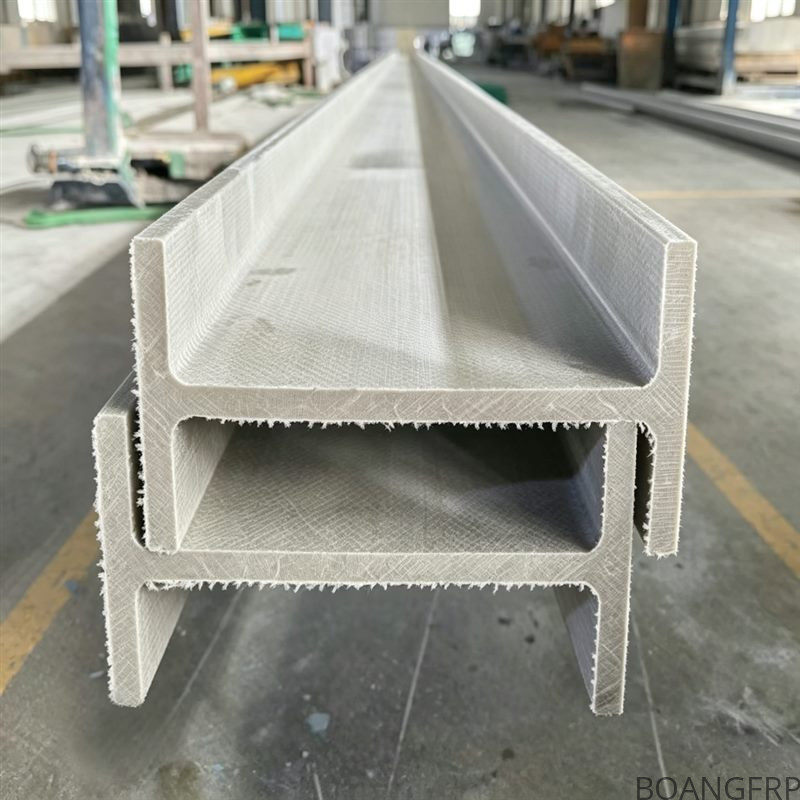
To solve this, structural engineers turn to the Pultruded FRP I-Beam. By utilizing advanced composite materials, this profile delivers massive load-bearing capacity while completely eliminating the threat of corrosion.
Why Choose Composite Beams Over Steel?
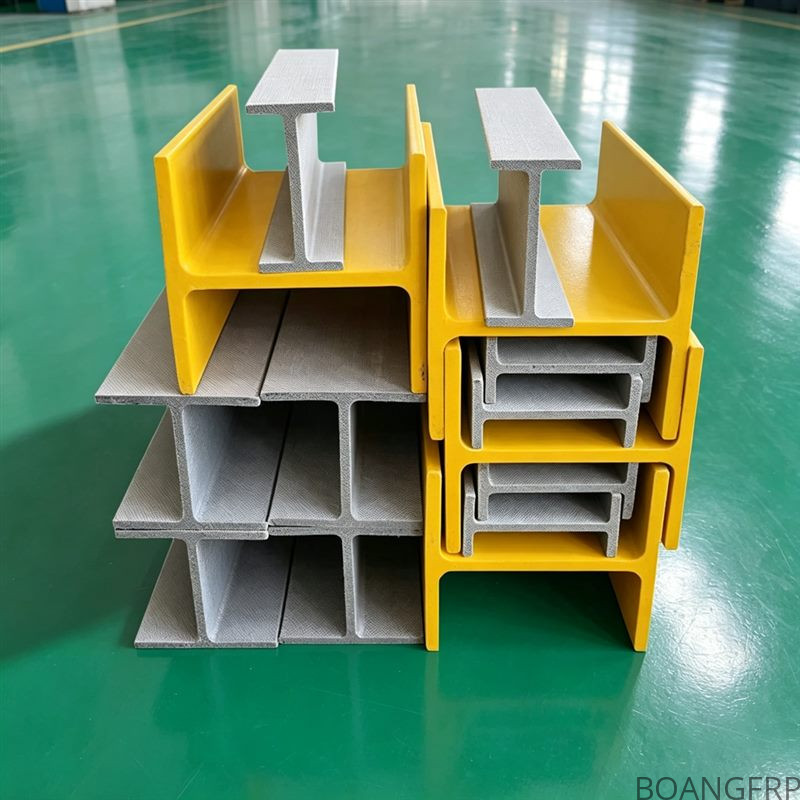
Whether you call it a Pultruded GRP I-Beam (the standard term in Europe and the UK) or an FRP H beam, the geometry is designed for maximum structural efficiency. The vertical web resists shear forces, while the horizontal flanges resist bending moments.
Here is why engineers specify composite beams:
-
Absolute Corrosion Resistance: FRP will never rust. It is impervious to saltwater, acids, and harsh chemicals. No painting or galvanizing is required.
-
Exceptional Strength-to-Weight Ratio: A pultruded beam is roughly one-quarter the weight of a steel beam of the same dimensions. This drastically reduces the dead load on the foundation and allows for faster, safer installation without heavy cranes.
-
Electrically Non-Conductive: For electrical substations and specialized industrial environments, the non-conductive nature of FRP provides a critical safety barrier.

The Important Distinction: FRP H Beam vs. I-Beam
Technically, the difference between an I-beam and an H-beam comes down to the flange-to-web ratio.
-
I-Beams typically have a narrower flange and a taller web. They are highly efficient for resisting bending and are often used as purlins or joists in structural framing.
-
H-Beams (also known as wide-flange beams) have wider flanges. This makes them exceptionally stable and ideal for use as vertical columns or heavy-load support pillars.
Because pultrusion allows for custom die designs, manufacturers can produce profiles that meet the exact geometric requirements of your structural drawings, whether you need a standard I-shape or a wider H-shape.
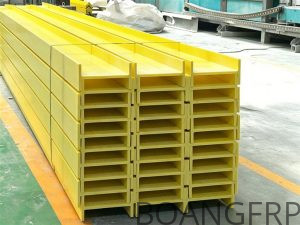
Engineering Considerations for FRP Beams
While these beams are incredibly strong, working with them requires a different engineering approach than steel.
1. Deflection is the Limiting Factor
FRP has a lower modulus of elasticity (stiffness) than steel. This means that while a composite beam might be strong enough to hold a load without breaking, it might bend (deflect) more than a steel beam. You must consult the manufacturer’s deflection tables and carefully plan the support span to ensure the floor or platform feels solid and meets building codes.
2. Lateral Torsional Buckling
Because FRP is lighter and less stiff than steel, long, unsupported spans of I-beams may be prone to lateral buckling. Bracing or lateral supports may be required to keep the beam stable under heavy loads.
3. The Critical Cut Edge Rule
This is the most common installation error. When your crew cuts or drills the pultruded beam, raw glass fibers are exposed. If these fibers absorb moisture or chemicals, the beam can delaminate from the inside out. Every single cut edge must be sealed with a compatible resin.

Why Buyers Partner with BOANG
At BOANG, we manufacture high-performance Pultruded FRP I-Beam and custom structural profiles for global B2B clients. We understand that primary structural framing is a zero-failure zone.
We use premium vinyl ester and isophthalic resins to ensure maximum UV and chemical resistance. Our profiles are pultruded with high glass content, providing the stiffness required for demanding industrial applications. We can supply standard sizes or work with your engineers to develop custom dies for specific flange and web dimensions. Every order includes detailed load and deflection data, mechanical test reports, and material certificates.
Do not let steel corrosion compromise the safety and budget of your facility. Send us your structural drawings, load requirements, and environmental conditions today. Our technical team will help you specify the correct composite beam and provide a factory-direct quote within 24 hours.
Contact BOANG today to secure a durable, corrosion-free structural foundation for your project.