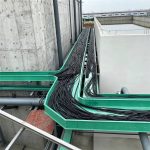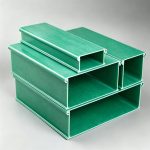


In industrial electrical design, cable management is often an afterthought until a problem occurs. When a project requires routing hundreds of meters of power and control cables, specifying the correct support system is critical for safety and maintenance.
If you are currently sourcing materials, you are likely deciding between a solid-bottom tray, a FRP perforated cable tray, or a fibreglass cable ladder. Choosing a reliable FRP cable tray supplier is just as important as the product itself, because the wrong material or a poor installation can lead to cable damage and system downtime.
This guide breaks down the differences between these two configurations to help you specify the right system for your facility.
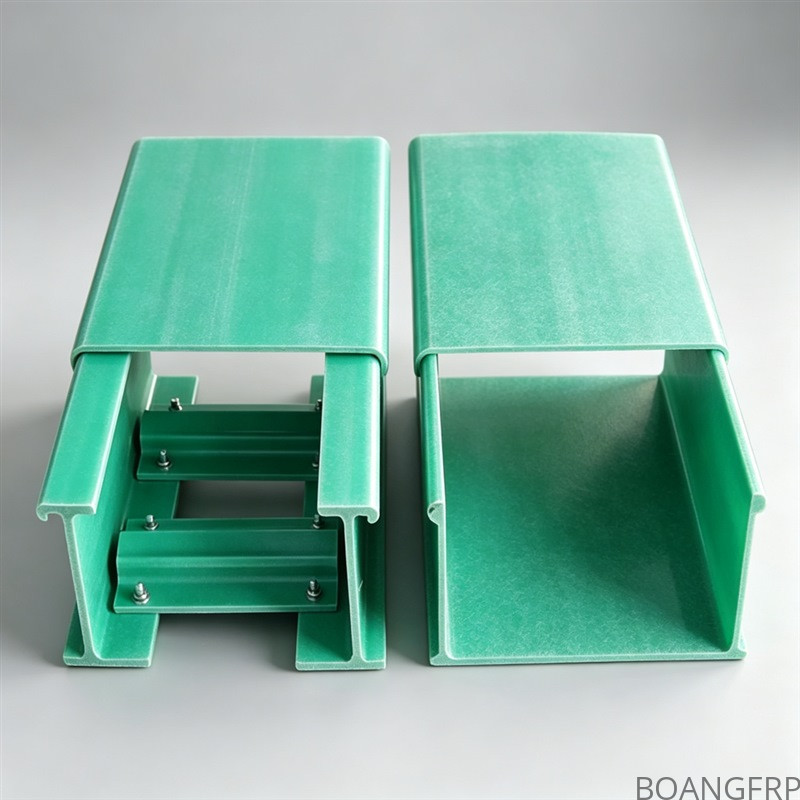
A perforated cable tray features a flat bottom with evenly spaced holes. It is highly versatile and is commonly specified for low-voltage control cables, communication lines, and instrumentation wiring.
Why engineers choose perforated trays:
Cable Support: The flat bottom provides continuous support for smaller, flexible cables that might sag if placed on a ladder.
Ventilation and Drainage: The perforations allow heat to dissipate and prevent water or condensation from pooling inside the tray.
Dust and Debris Protection: While it drains liquids, the flat surface prevents large debris from falling directly onto the cables from above.
Because it is made of FRP, the perforated tray will never rust, making it ideal for wastewater treatment plants, food processing facilities, and chemical environments where moisture and washdowns are frequent.

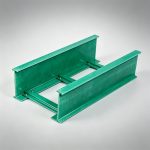
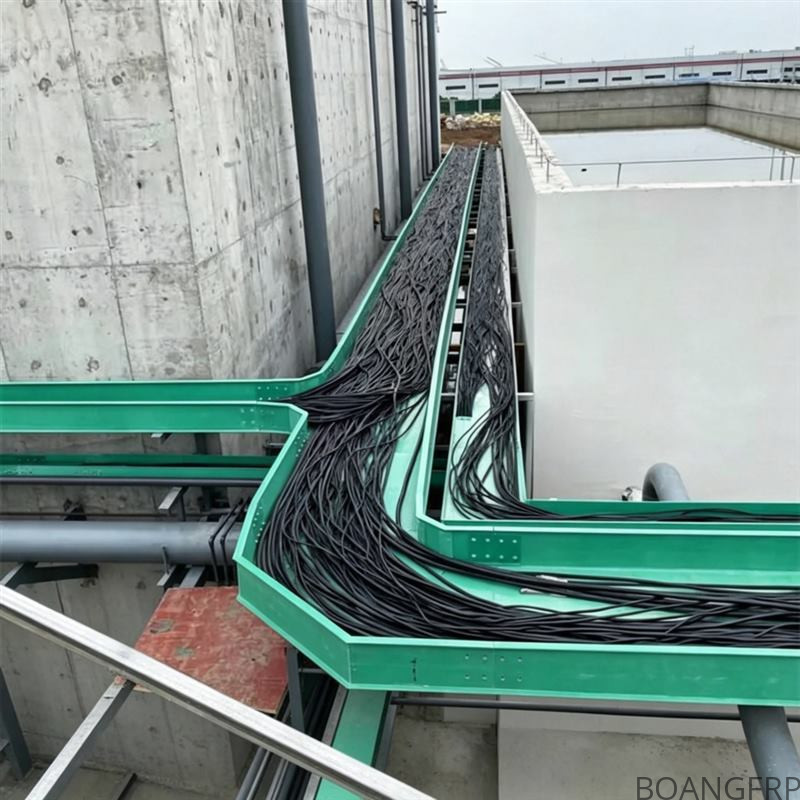
When your project involves large-diameter, heavy-duty power cables, a fibreglass cable ladder is usually the better choice. It consists of two side rails connected by rungs, resembling a traditional ladder.
Key advantages of cable ladders:
High Load Capacity: The deep side rails provide exceptional structural rigidity. This allows the ladder to span longer distances between supports without sagging under the weight of heavy power cables.
Maximum Heat Dissipation: The open-rung design allows for unrestricted airflow. Heavy power cables generate significant heat, and the open structure prevents heat buildup that could degrade insulation over time.
Easy Cable Pulling: The open design makes it much easier for electricians to pull heavy cables and secure them with cable cleats, especially in vertical drops or long straight runs.
Whether you choose a perforated tray or a ladder system, the quality of the final installation depends heavily on the supplier.
Not all fibreglass products are manufactured to the same standard. A professional FRP cable tray supplier will focus on the details that ensure long-term performance:
Resin Selection: They should ask about your chemical environment. For severe exposure, they must recommend vinyl ester resin. For general outdoor use, isophthalic resin is usually sufficient.
Load and Deflection Data: They must provide accurate load charts. You cannot guess the support span; the supplier should provide the data to ensure your cables do not cause the tray to sag.
Thermal Expansion Management: FRP expands and contracts with temperature changes. A good supplier will recommend expansion joints for long runs to prevent the tray from buckling.
Grounding Guidance: Since FRP is non-conductive, your supplier should provide bonding jumpers and clear instructions on how to ground the system safely.

At BOANG, we supply both FRP perforated cable trays and fibreglass cable ladders for industrial projects worldwide. We understand that our clients need more than just a product; they need technical support and reliable documentation.
We manufacture our trays and ladders using premium resins and strict quality control. Every order can include detailed load data, material certificates, and installation guidelines. We also provide the necessary accessories, including FRP brackets, expansion joints, and stainless steel hardware, to ensure a complete and professional installation.
Do not let a rusted steel tray compromise your electrical system. Send us your cable routing layout, load requirements, and environmental conditions. Our team will help you choose between a perforated tray and a cable ladder, and provide a factory-direct quote within 24 hours.
Contact BOANG today to secure a reliable, corrosion-resistant cable management system for your next project.

The FRP pultruded tubes produced by our company include square tubes, rectangular tubes, round tubes, etc. We can also customize other special-shaped tubes acc…
Read More
FRP ladder is made of FRP pultruded profiles through assembly process. It has the characteristics of light weight, high strength, easy installation, corrosion …
Read More
Fiber reinforced plastic panels are made by pultrusion process. We can customize various specifications and colors according to customer requirements.
Read More
The FRP guardrail system is assembled with FRP pultruded profiles and has the characteristics of light weight, high strength, corrosion resistance, easy instal…
Read More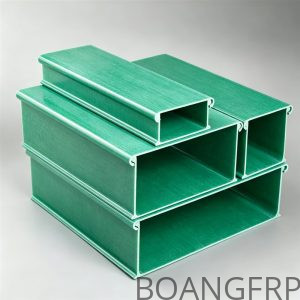
Choosing the Right FRP Cable Tray Manufacturer for Your Project Sourcing materials for an industrial project is rarely just about finding the lowest price.…
Read More
Fiberglass round rod is a kind of FRP rod made by pultrusion process. We can make various specifications according to customer requirements.
Read More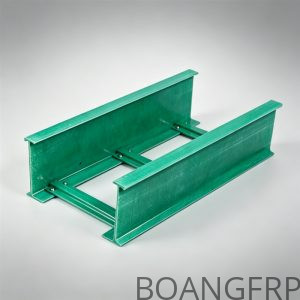
& GRP Cable Ladder: Heavy-Duty Cable Support When routing heavy power cables across a plant, engineers often face a structural dilemma. Standard cable tray…
Read More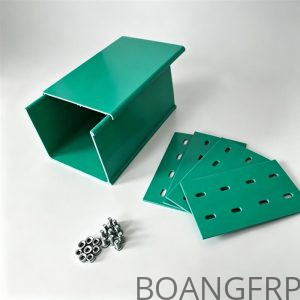
FRP cable trays are mainly used to support and protect cables. The main styles are trough type, ladder type and perforated type.
Read MoreIf you are interested in our products and want to know more details, please leave a message here, we will reply you as soon as we can.